
On-going
project-thumb
Betting on Uncertainty: A Mathematician’s Path from Paris to Hanoi
Laurent El Ghaoui, Vice Provost of Research and Innovation
I’ve spent my career building mathematics for decision-making under uncertainty.
Leaving a twenty-year career at Berkeley to help build a five-year-old university in Vietnam was the biggest bet I ever placed on that idea.
I grew up in France, where mathematics and physics were always the subjects that made the most sense to me: clean, logical, unforgiving in the best way. I studied at École Polytechnique outside Paris, took a master’s in automatic control at Sup’Aéro, and then went to Stanford for a PhD in aeronautics and astronautics. Aerospace engineering turns out to be excellent training
for anyone who ends up thinking about uncertainty for a living — you cannot plan a spacecraft trajectory, or certify an aircraft, by assuming your measurements and your models are exactly right. That question never really left me.
It became the thread running through the rest of my career. Together with two colleagues, I helped found what’s now known as robust optimization: a branch of mathematics for making reliable decisions when your data is only approximately correct. After early faculty positions back in France, at ENSTA and the Sorbonne, I moved to the University of California, Berkeley,
where I stayed for more than twenty years, jointly appointed in electrical engineering and industrial engineering & operations research.
Berkeley in the 2000s and 2010s was a remarkable place to watch a field turn into something else entirely. The tools we’d built for robust decision-making turned out to be exactly what the new wave of machine learning needed, and I found myself pulled into it — first through sparse learning and feature selection, later as a founding member of the Berkeley AI Research Lab
(BAIR). For over a decade I also taught financial data science to Berkeley’s Master of Financial Engineering students, work that eventually grew into a 700-page textbook. Somewhere along the way I was named among the top 2% of the world’s most-cited scientists across all disciplines, and in the top 0.3% specifically within industrial engineering and automation — a statistic I still find slightly strange, because the work never felt like it changed; the field around it did.
After two decades at Berkeley, I made what probably looked, from the outside, like an unlikely decision: I moved to Vietnam to help build VinUniversity, a young, private, not-for-profit university just outside Hanoi. What struck me first was the ambition and drive of the founding team. A university as old and as large as Berkeley carries enormous strengths, but also enormous inertia; a five-year-old university does not. I saw a rare chance to help shape, almost from a blank page, what a research culture and a college of engineering and computer science could look like — at an institution nimble enough to respond to the interlocking crises the world now faces in health, climate, energy and water, and ambitious enough to become a genuine research hub for the region.
Today I wear a few hats at VinUniversity: Vice Provost of Research and Innovation, , and Scientific Director of the Center for Environmental Intelligence. What connects them, for me, is a single bet — that a young university in Vietnam can do genuinely original science, not just import it. One of my favorite examples: in 2021, my former Berkeley colleague Omar Yaghi visited Vietnam to receive the VinFuture Prize for his work on metal–organic frameworks. I introduced him to our team; he told me about an idea he called Algorithmic Iterative Reticular Synthesis, using AI to discover new materials, and I immediately thought of our people at VinUni. That conversation grew into a joint research project and, eventually, a paper in Nature Synthesis: an AI system that now does in about ten hours what used to take a researcher a thousand hours of manual classification work. Omar went on to share the 2025 Nobel Prize in Chemistry. We’ ve since worked with another Nobel laureate, physicist Kostya Novoselov, on using deep learning to predict the properties of new materials. My own research keeps moving, too. Over the past five years I’ve developed what I call implicit models for neural networks — a framework that allows feedback loops inside a network’s
structure, closer to how the brain works, and makes today’s very large AI models easier to analyze mathematically and, potentially, to compress. With a colleague in Turin, I’ve used the same ideas to build neural-network controllers for physical systems that come, for the first time, with real guarantees of stability. And because I still enjoy teaching as much as I ever did, I recently rebuilt VinUni’s linear algebra course around real applications like reading brain scans, and worked with a group of our students and our university’s library team to build VinUni’s first AI-integrated e-textbook. What excites me most now is proving this can scale beyond any single project. Last year, we launched HORIZONS, an annual international conference at VinUni: its first edition brought together researchers working at the intersection of AI and materials science, and this year’s, which I chaired, focused on optimization for sustainability, drawing participants from as far as Singapore and Hong Kong. I’ve come to believe that countries like Vietnam don’t have to simply follow where data science and AI have already gone — they can lead, precisely because they’re still deciding what their research infrastructure will look like. That’s the bet I made with the last several years of my career. I’d make it again.
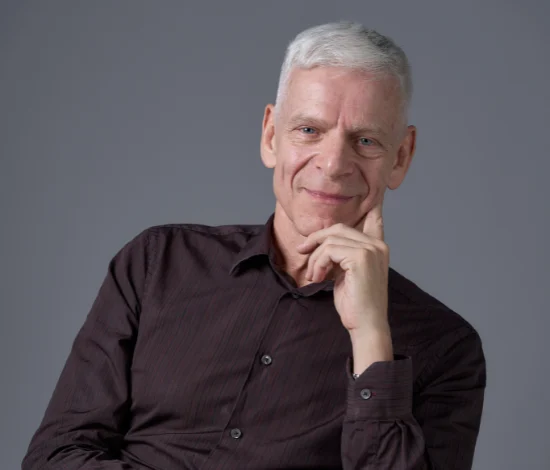
Vice Provost of Research & Innovation Scientific Director, Center for Environmental Intelligence
Prof. Laurent El Ghaoui
Laurent El Ghaoui obtained his PhD at Stanford University in 1990, and held appointments at the Ecole National Superieure de Techniques Avancees (ENSTA, now part of Institut Polytechnique de Paris) and University de Paris La Sorbonne. In 1999, he joined the EECS department at UC Berkeley, where he became full…
View Full ProfileOngoing Projects
On-going
AI-Powered Early Disease Detection System
This project develops machine learning models that flag high-risk cases earlier in clinical workflows
View project details →